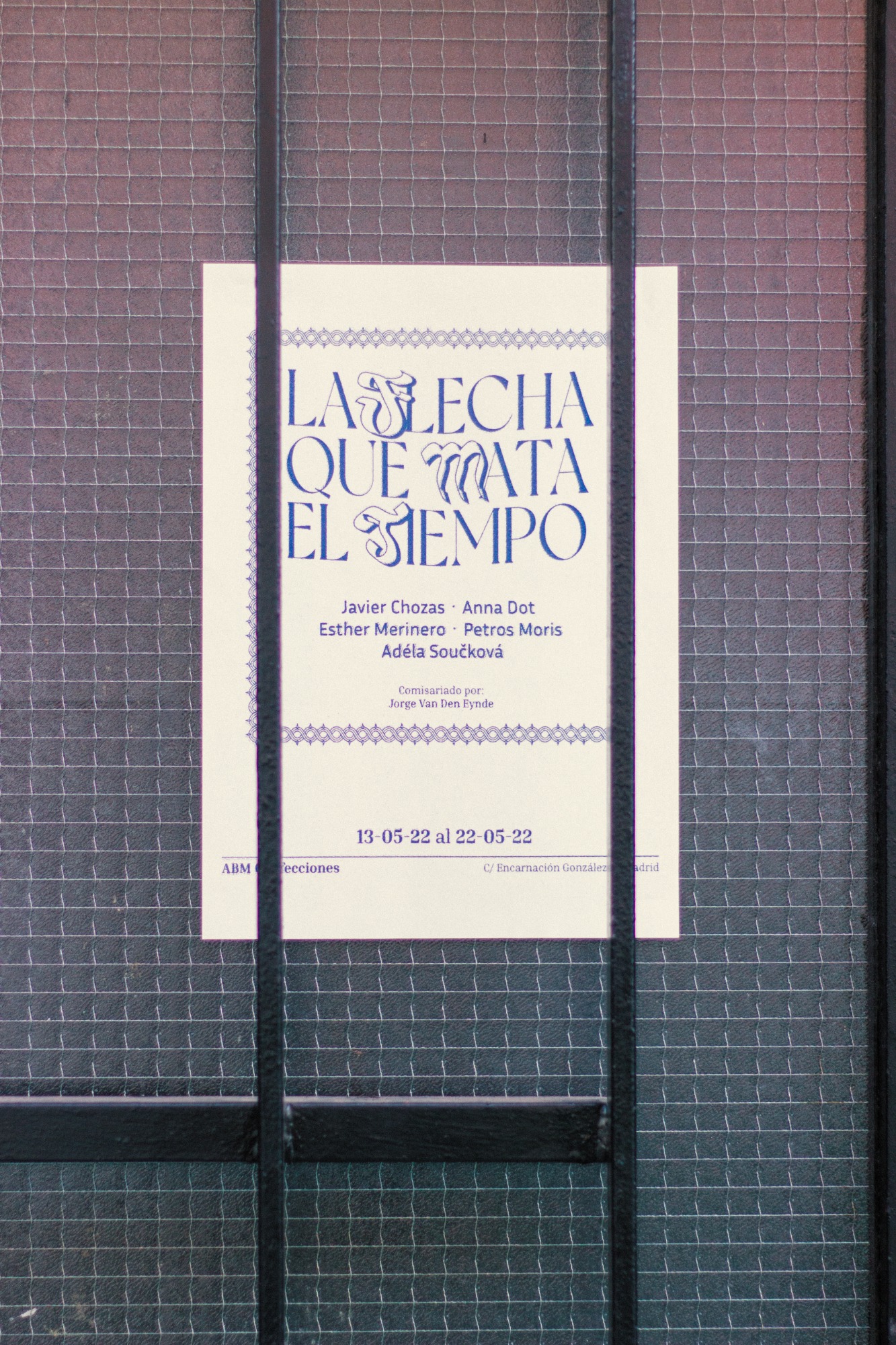
The Arrow that Kills Time proposes a fantastical approach to the exhibition space, exploring speculative fiction as an artistic strategy. Through the work of Javier Chozas, Anna Dot, Esther Merinero, Petros Moris, and Adéla Součková, the exhibition offers a set of clues, traces, or portals to other dimensions, scenarios, or temporalities, allowing the audience to discover and chart their own paths and narratives around the exhibited works.
Evoking Ursula K. Le Guin’s celebrated text, “The Carrier Bag Theory of Fiction”[1], the exhibition brings together a series of artistic proposals that challenge the “arrow-that-kills-time” described by the American writer, who used the metaphor of the arrow to refer to the linearity that had dominated Western fiction. A linearity tied to the tale of the hero, which Le Guin contrasts with the bag—that is, fiction understood as a container of interdependent elements, a fiction that, rather than sustaining a single linear narrative path, shoots arrows in innumerable directions: to past, present, and future moments, to parallel and opposing realities. In this way, the artists present in the exhibition embody this fiction-as-container to weave together complex narratives of the contemporary world.
The Arrow that Kills Time transforms the former clothing workshop now occupied by ABM Confecciones into an ecosystem of fictions, arranging traces of characters, settings, or episodes beyond the four walls it inhabits.
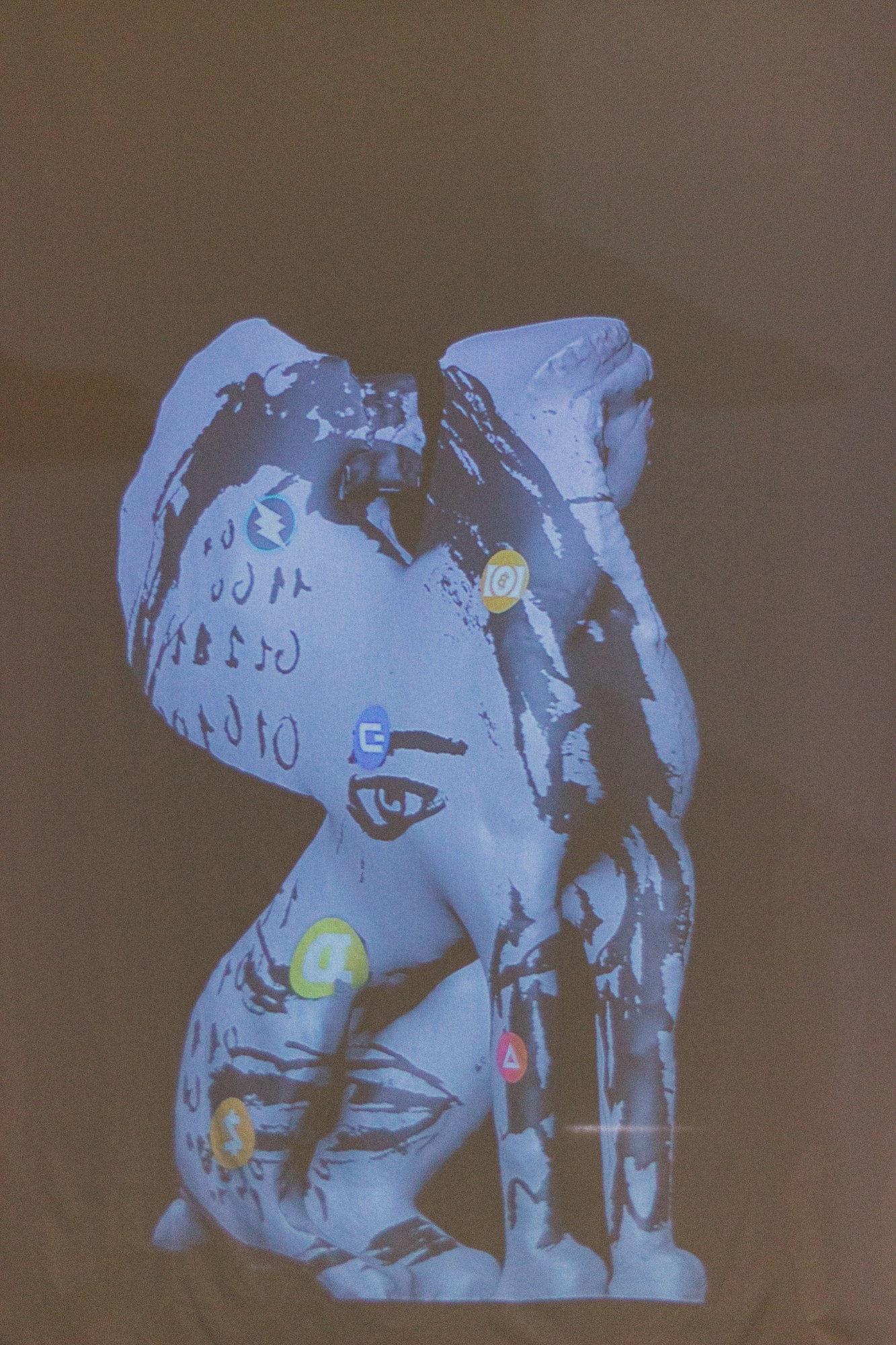
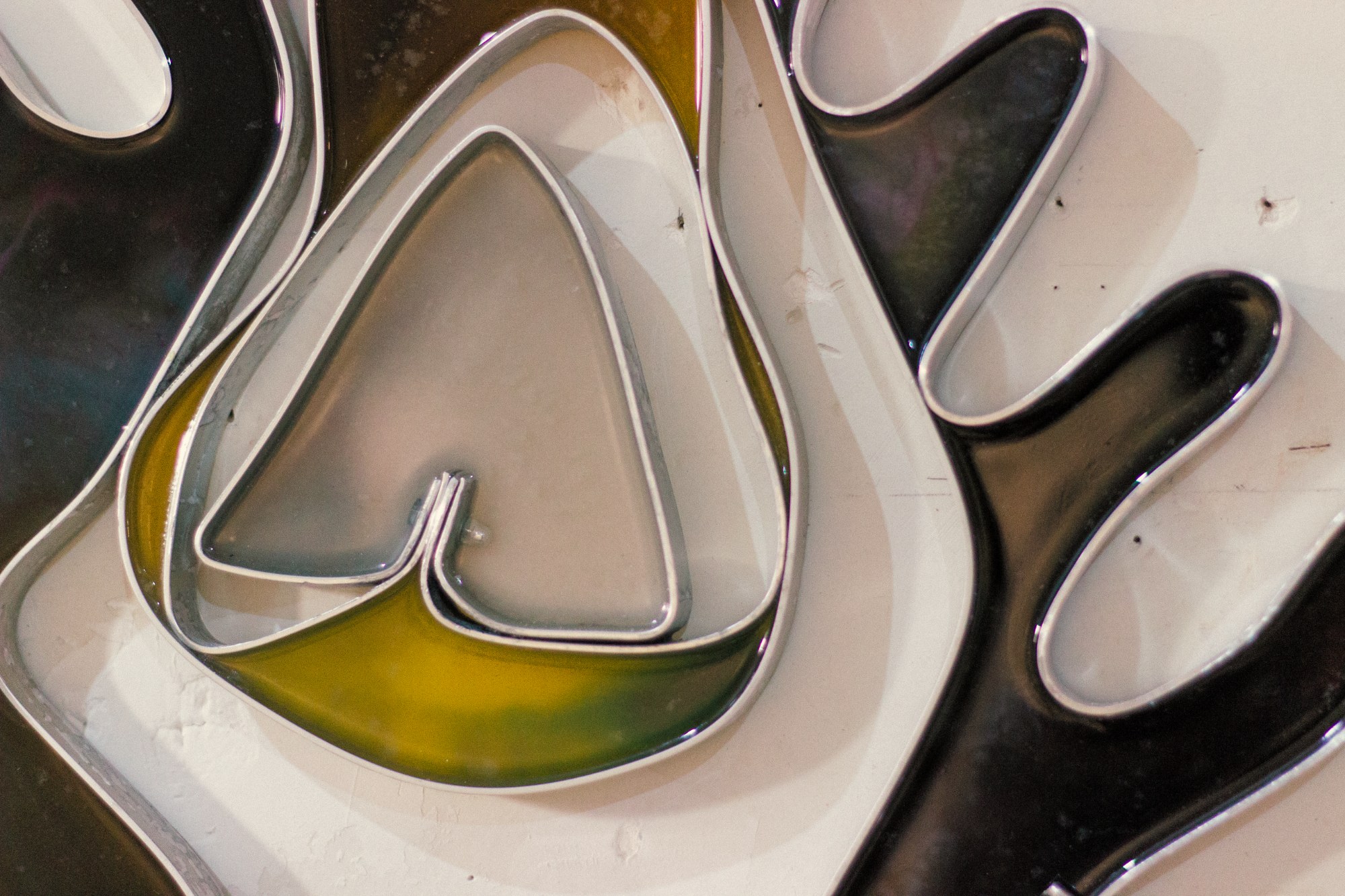
Petros Moris’s sphinx welcomes the exhibition, protecting the space from possible dangers outside. Once the beast is crossed, the audience enters the exhibition space, populated by Anna Dot’s staffs, which float in the air invoking the fallen bodies from a Brueghel painting; Esther Merinero’s portals, which lead the public through cosmic and geological enclaves; and the corporeal forms of Javier Chozas, twisting and moving across the space in a choreography. A few minutes later, a voice emerges from one of the corners: it is a girl speaking on behalf of the Earth, corresponding to the work of Adéla Součková.
The Arrow that Kills Time invites visitors to explore the exhibition space in search of clues, traces, or portals to uncover the fantastical component of the show.
Production: Alberto Custodia Martínez.
Graphic design: Pablo Bonelli.
Documentation (photography): Pablo Bonelli.
Documentation (video): Alberto Van den Eynde Gray.
[1] Ursula K. Le Guin, “The Carrier Bag Theory of Fiction,”.
The Arrow that Kills Time proposes a fantastical approach to the exhibition space, exploring speculative fiction as an artistic strategy. Through the work of Javier Chozas, Anna Dot, Esther Merinero, Petros Moris, and Adéla Součková, the exhibition offers a set of clues, traces, or portals to other dimensions, scenarios, or temporalities, allowing the audience to discover and chart their own paths and narratives around the exhibited works.
Evoking Ursula K. Le Guin’s celebrated text, “The Carrier Bag Theory of Fiction”[1], the exhibition brings together a series of artistic proposals that challenge the “arrow-that-kills-time” described by the American writer, who used the metaphor of the arrow to refer to the linearity that had dominated Western fiction. A linearity tied to the tale of the hero, which Le Guin contrasts with the bag—that is, fiction understood as a container of interdependent elements, a fiction that, rather than sustaining a single linear narrative path, shoots arrows in innumerable directions: to past, present, and future moments, to parallel and opposing realities. In this way, the artists present in the exhibition embody this fiction-as-container to weave together complex narratives of the contemporary world.
The Arrow that Kills Time transforms the former clothing workshop now occupied by ABM Confecciones into an ecosystem of fictions, arranging traces of characters, settings, or episodes beyond the four walls it inhabits.
Petros Moris’s sphinx welcomes the exhibition, protecting the space from possible dangers outside. Once the beast is crossed, the audience enters the exhibition space, populated by Anna Dot’s staffs, which float in the air invoking the fallen bodies from a Brueghel painting; Esther Merinero’s portals, which lead the public through cosmic and geological enclaves; and the corporeal forms of Javier Chozas, twisting and moving across the space in a choreography. A few minutes later, a voice emerges from one of the corners: it is a girl speaking on behalf of the Earth, corresponding to the work of Adéla Součková.
The Arrow that Kills Time invites visitors to explore the exhibition space in search of clues, traces, or portals to uncover the fantastical component of the show.
Production: Alberto Custodia Martínez.
Graphic design: Pablo Bonelli.
Documentation (photography): Pablo Bonelli.
Documentation (video): Alberto Van den Eynde Gray.
[1] Ursula K. Le Guin, “The Carrier Bag Theory of Fiction,”.