The group exhibition Subplotters addresses the material and spatial qualities of that which cannot be seen or understood through our traditional categories of knowledge. In this way, a series of processes, gestures, and reminiscences of the hidden manifested—presences that engaged with the deconstruction of language, collective processes of resignifying the world, or the transmutation of materials and forms, among other concerns of our time. The exhibition included work by Álvaro Chior, Nina Davies, Evelina Hagglund, and Cristina Spinelli, the latter two having the opportunity to carry out a residency within the exhibition space.
Subplotters received support from the Europe Culture Moves program of Creative Europe and the Goethe-Institut.
Documentation: L. San Gregorio and Goro Studio
Curatorial text:
“Whispers, traces, plots—or subplots—reminiscences of inert matter.”
Subplotters begins from the difficulty of configuring alternative imaginaries of reality, observing those experiences, communities, and affects that remain hidden or invisible, revealing their strategies or processes.
If the contemporary world is an unbreakable fortress, governed by homogeneous and rigid discourses and narratives, the artistic practices presented in Subplotters seek cavities in the stone or holes in its moat where contemporaneity can be reconsidered. These are narratives found underground, buried beneath the foundations of the world, secrets that snake through the bodies of the present or future legends yet to be written.
Charge
After visiting several scrapyards and junkyards around Madrid and arranging in Pradiauto the scraps and objects that Evelina Hägglund and Cristina Spinelli would use during their residency, everything we touched gave us a jolt. This sensation lasted for several days—a kind of electric charge circulating through the space. A presence, invisible and tangible at the same time.
Unearth
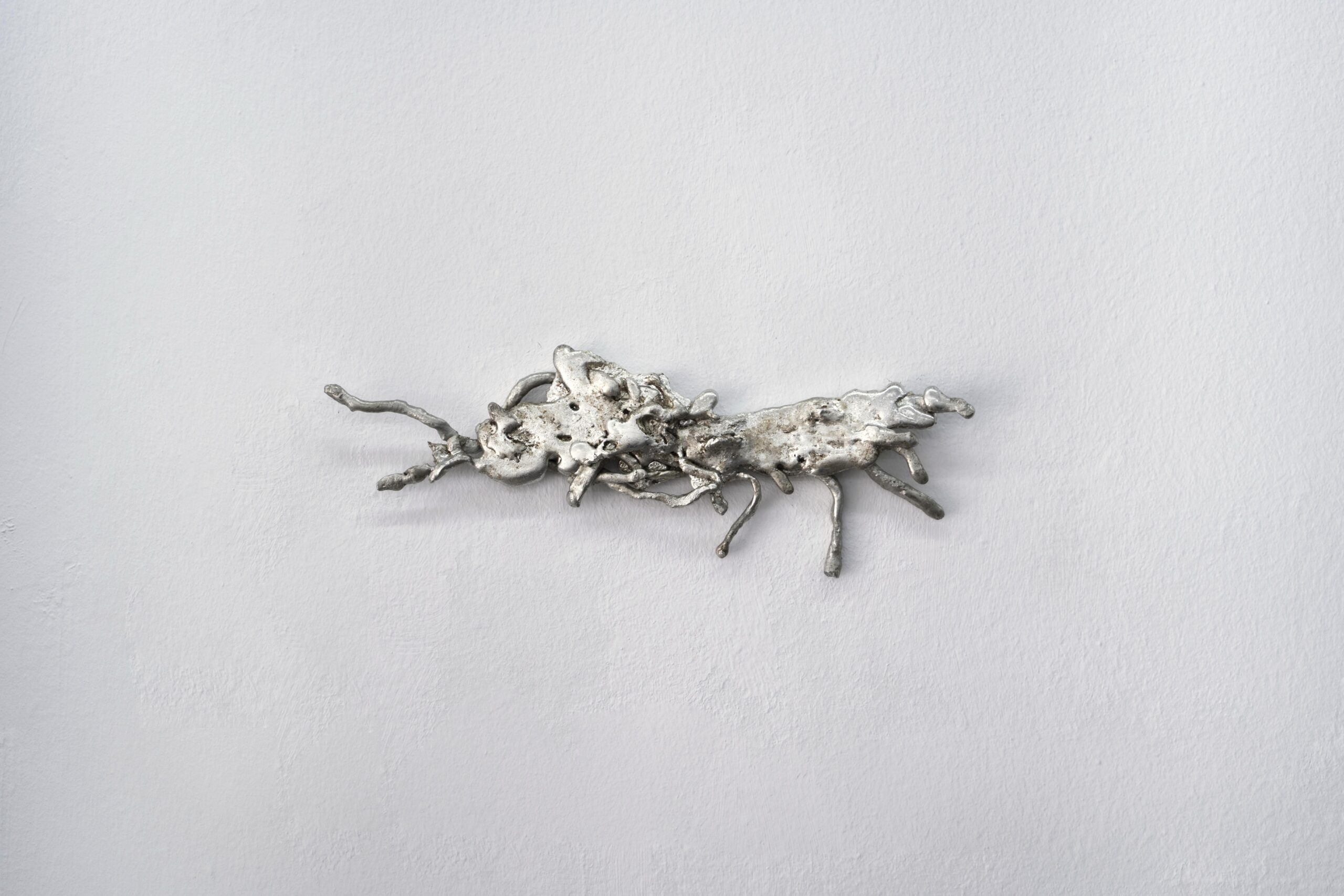
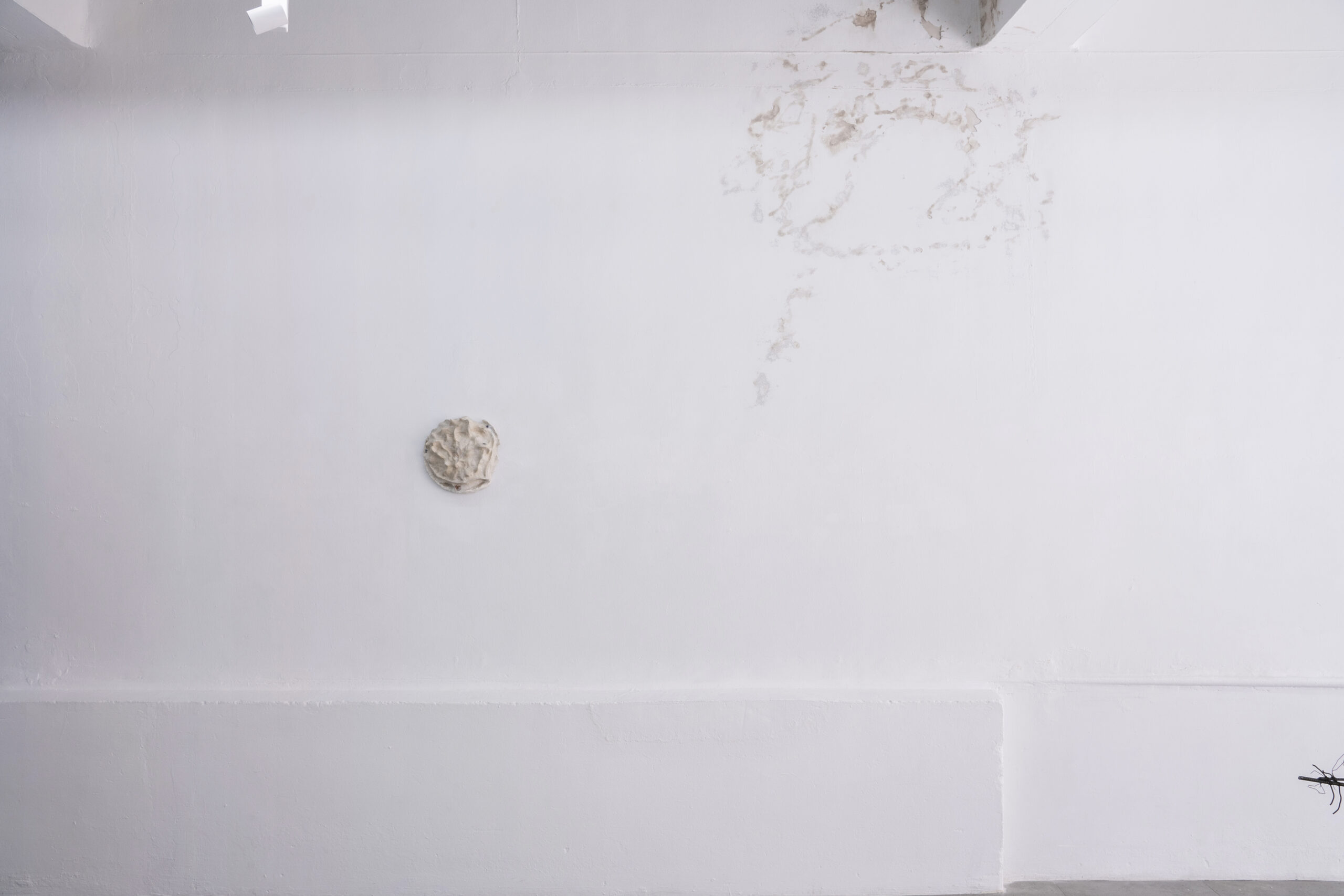
Almost two years ago, Cristina created fulli for the exhibition The Tongue Says Loneliness, a mural made with fire on the wall, whose forms revisited those formalized in a previous work. In this way, a kind of ghost emerged from the wall, a spectral presence that she has unearthed in Subplotters.
Transmute
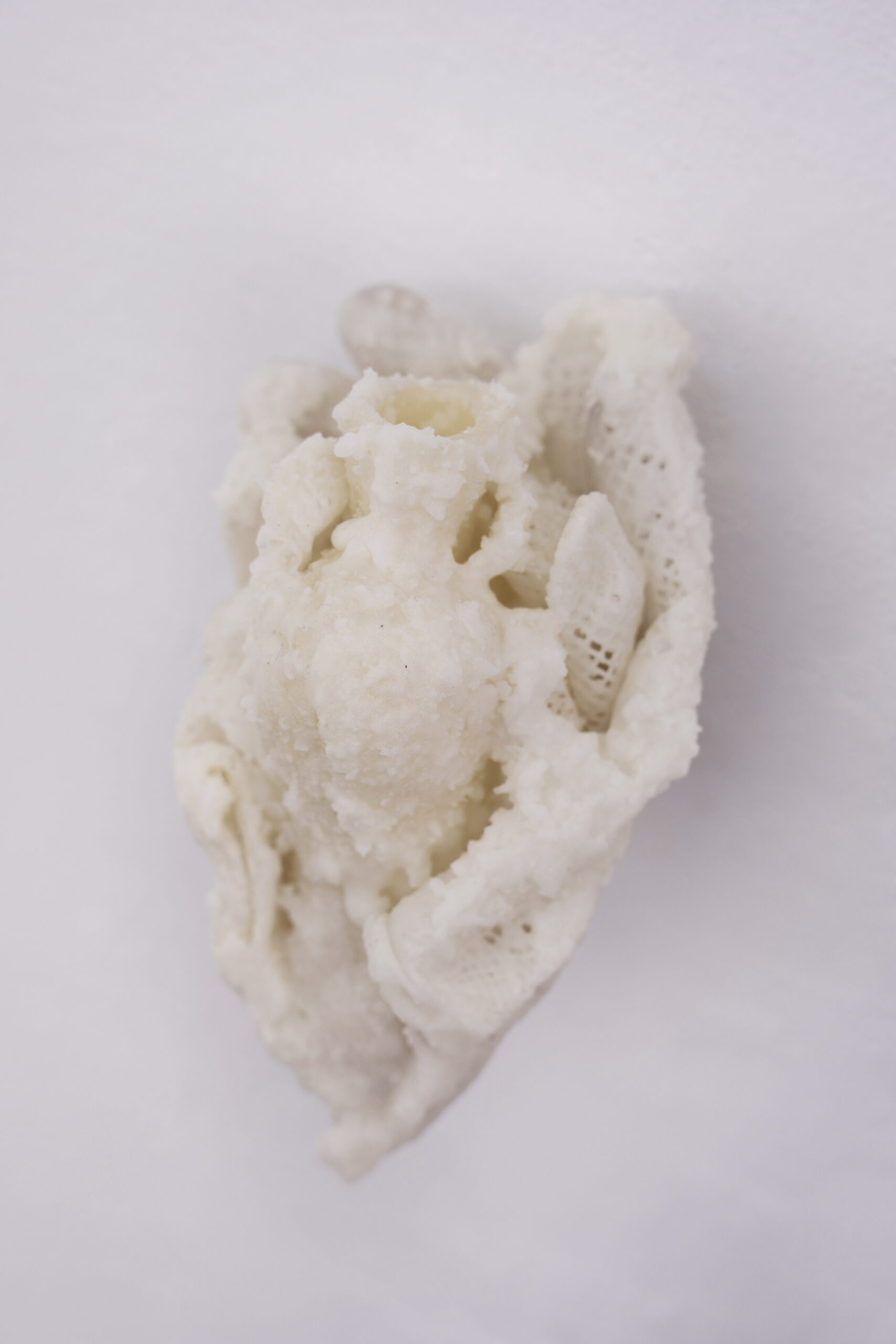
Beside her, M2 manifests a process of revelation and transmutation, as the artist captured the decorative motifs of a palace in Madrid in a mold, transforming stone into plaster and incorporating wax, shells, and caramel on its surface. In this way, four materials must pass from a liquid to a solid state to take their final form.
Resurrect
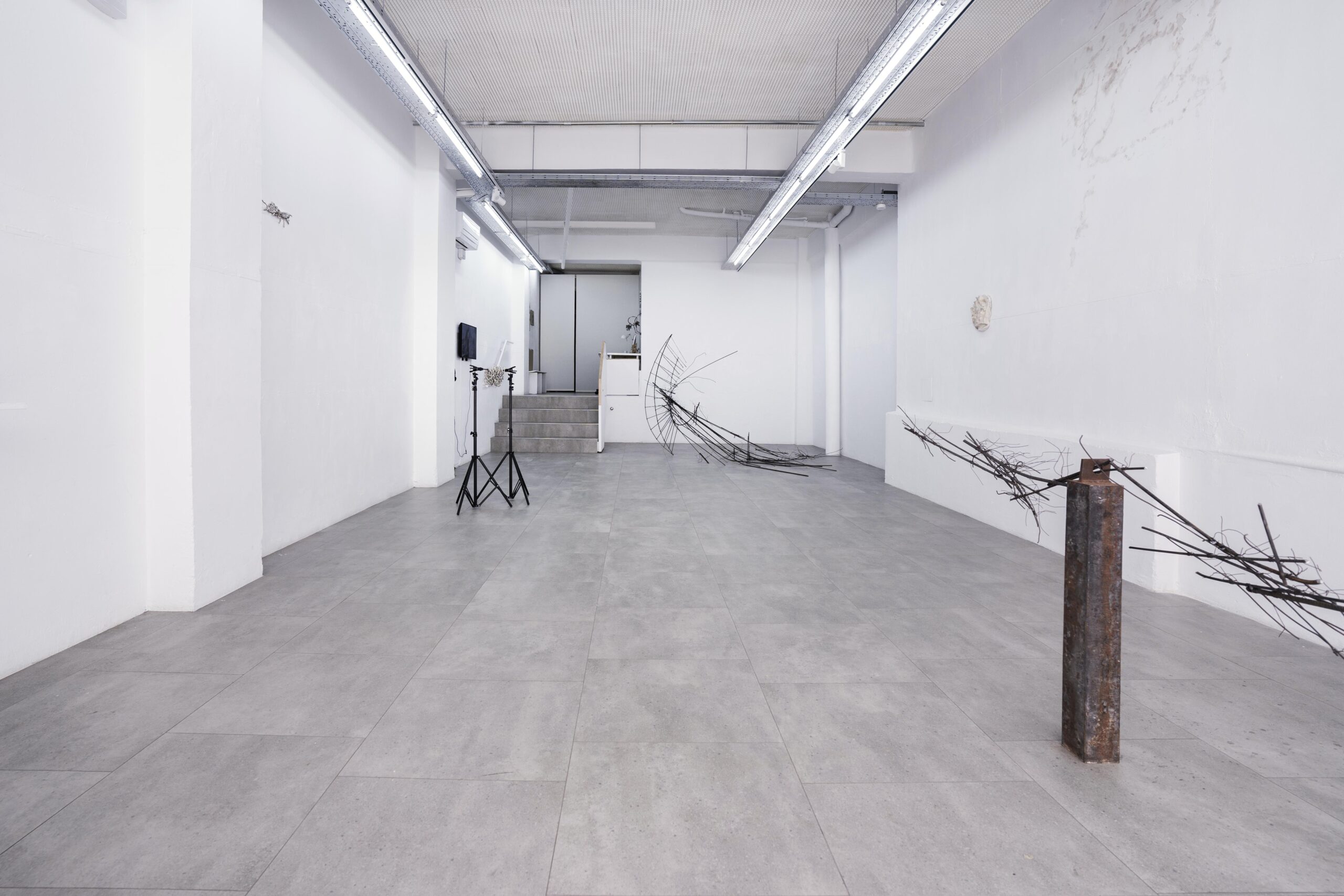
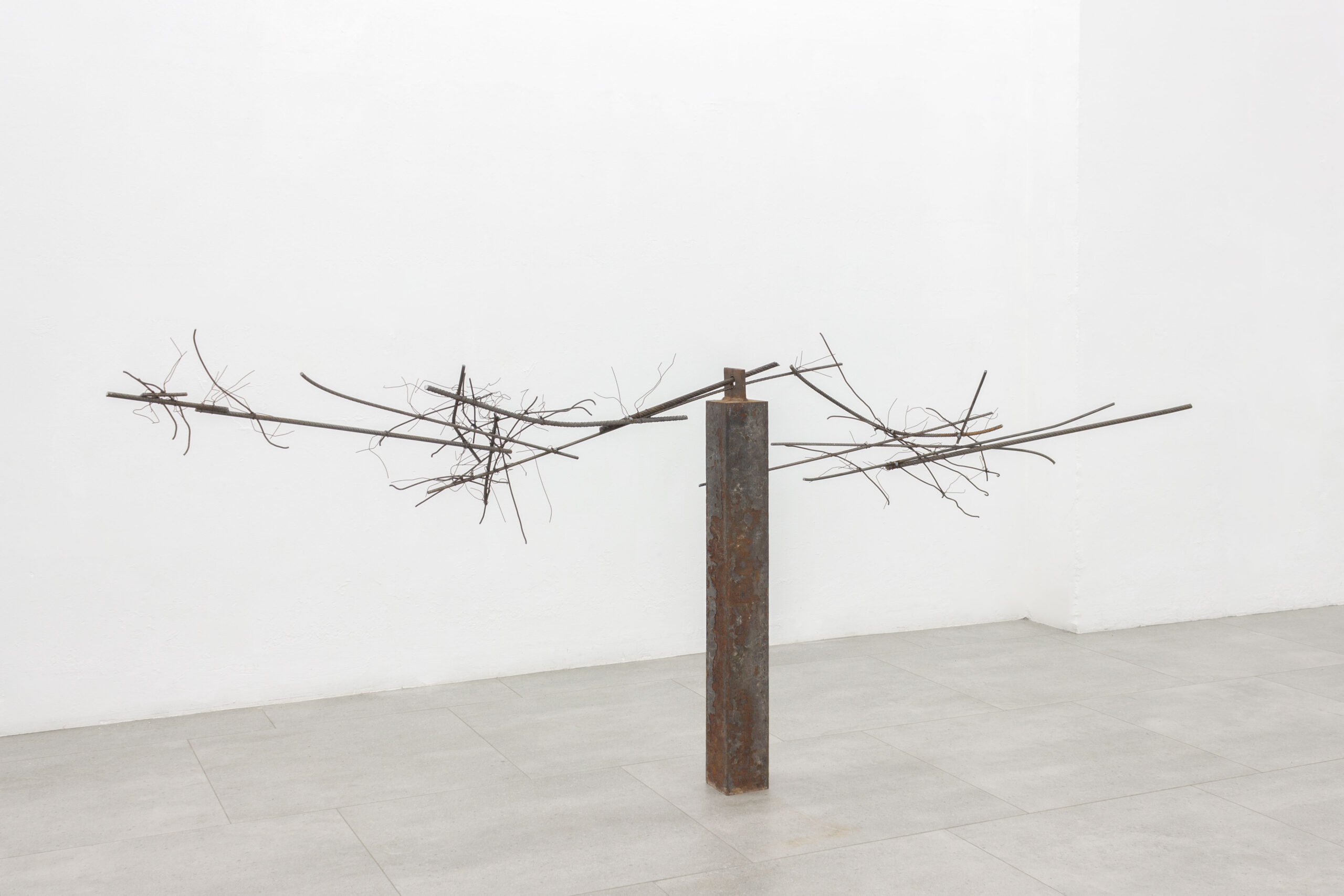
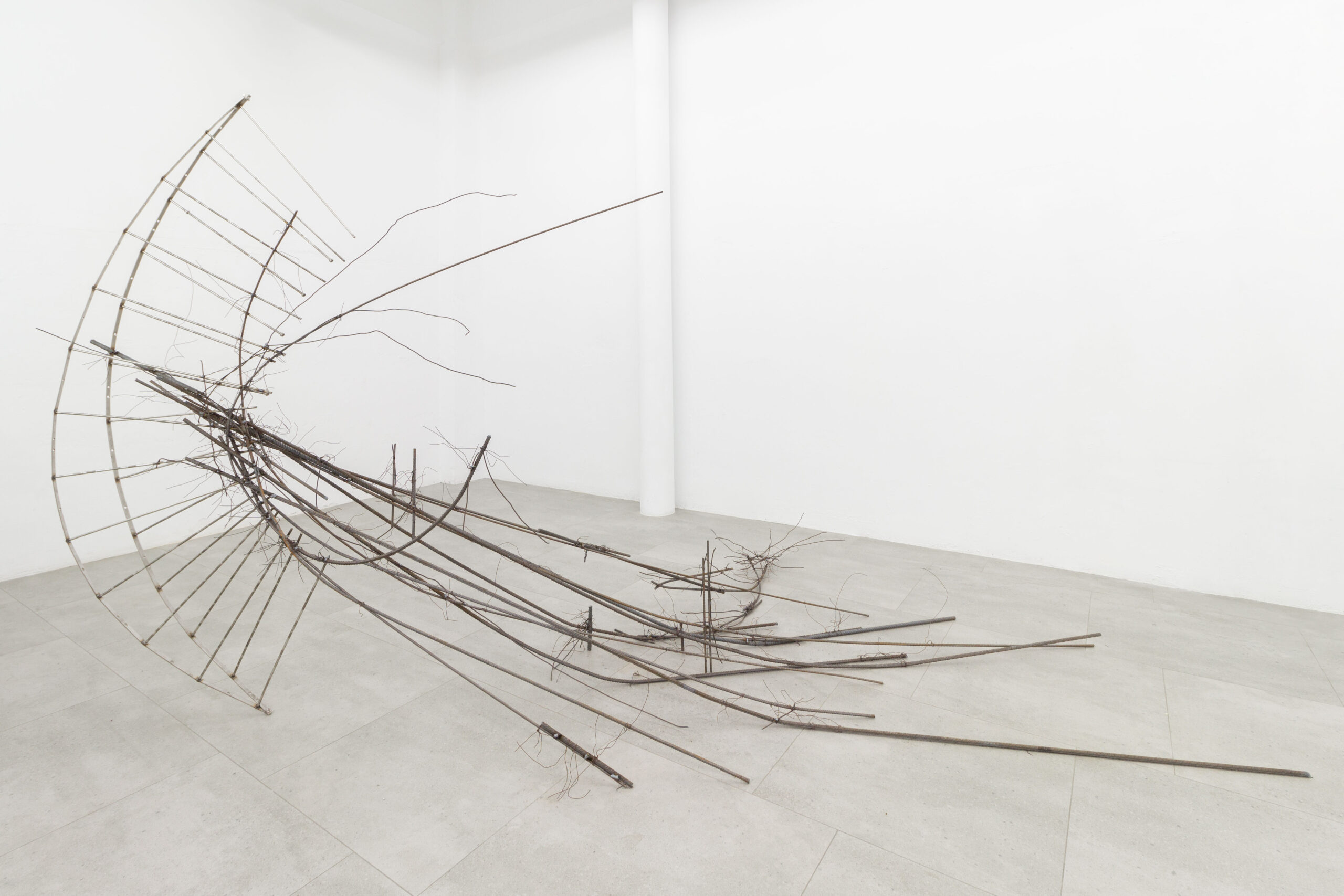
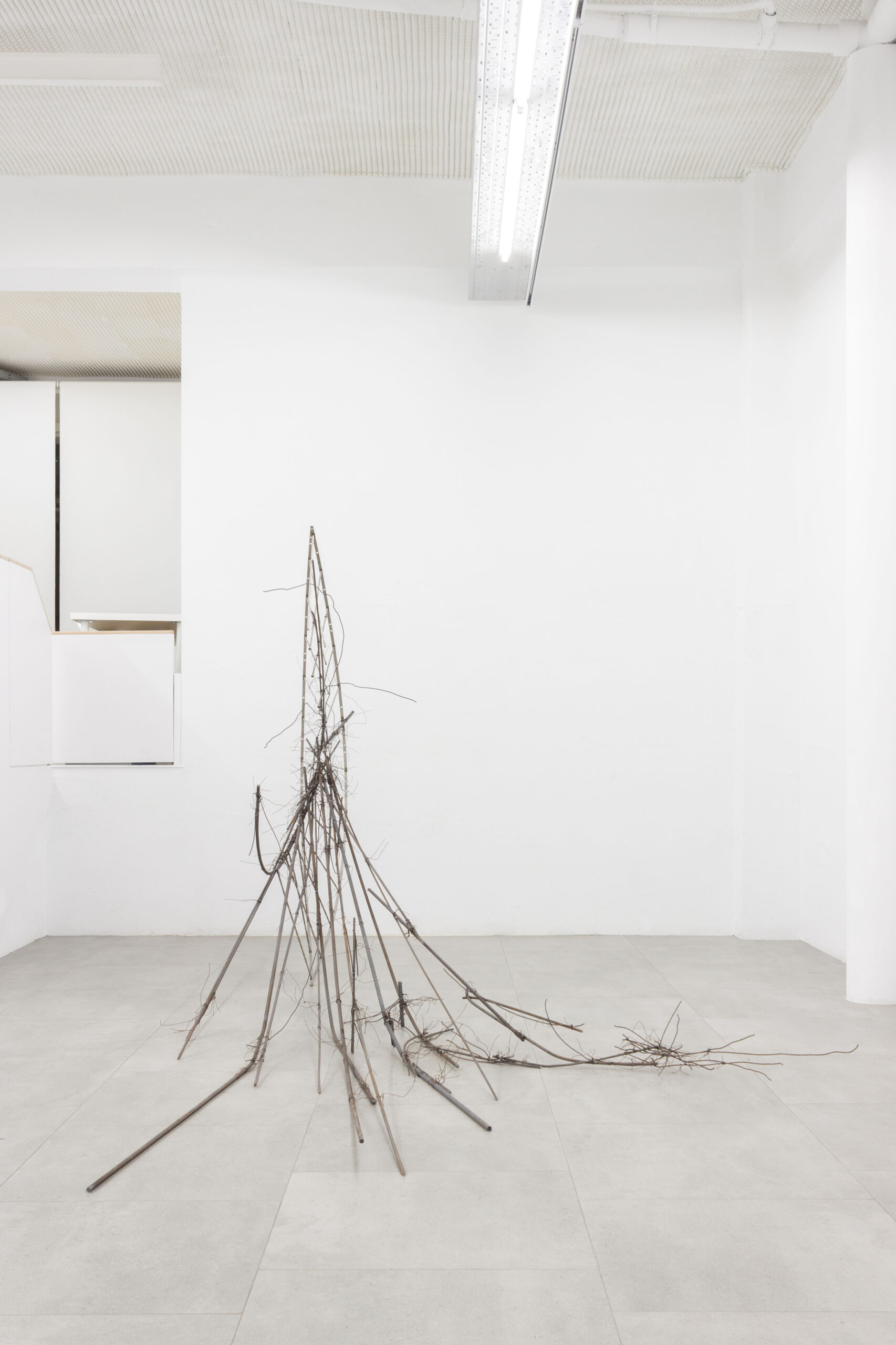
Two industrial fossils and round, corrugated rods. Rods cut, bent, joined with wire, and welded at their centers of gravity: Birth (in the shadow of civilization) and I can’t wait, by Evelina Hägglund—two forms of organic appearance yet made from the most artificial of materials. Two creatures, objects, or sculptures populate the exhibition space as new beings born from the hands of the artist.
Whisper
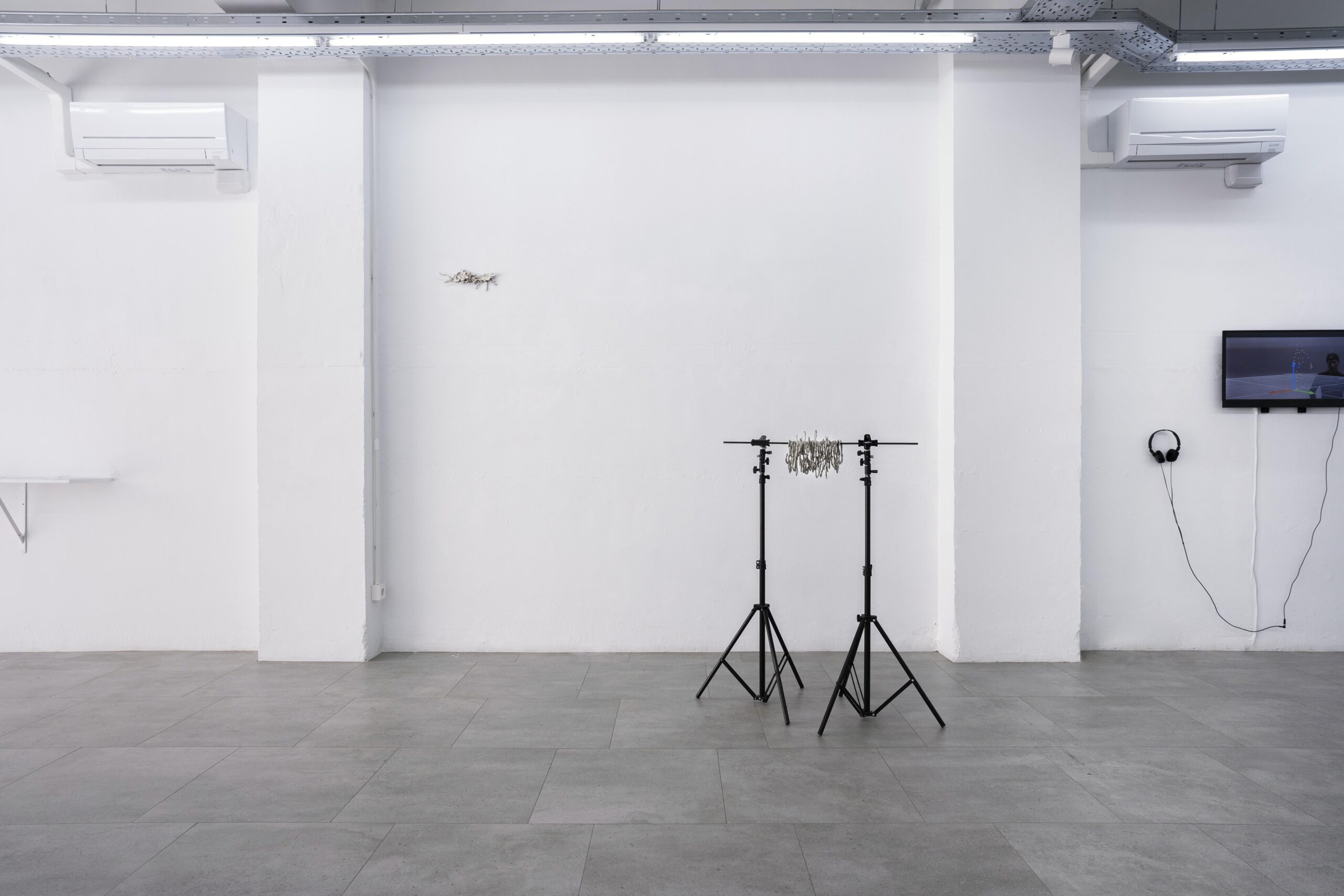
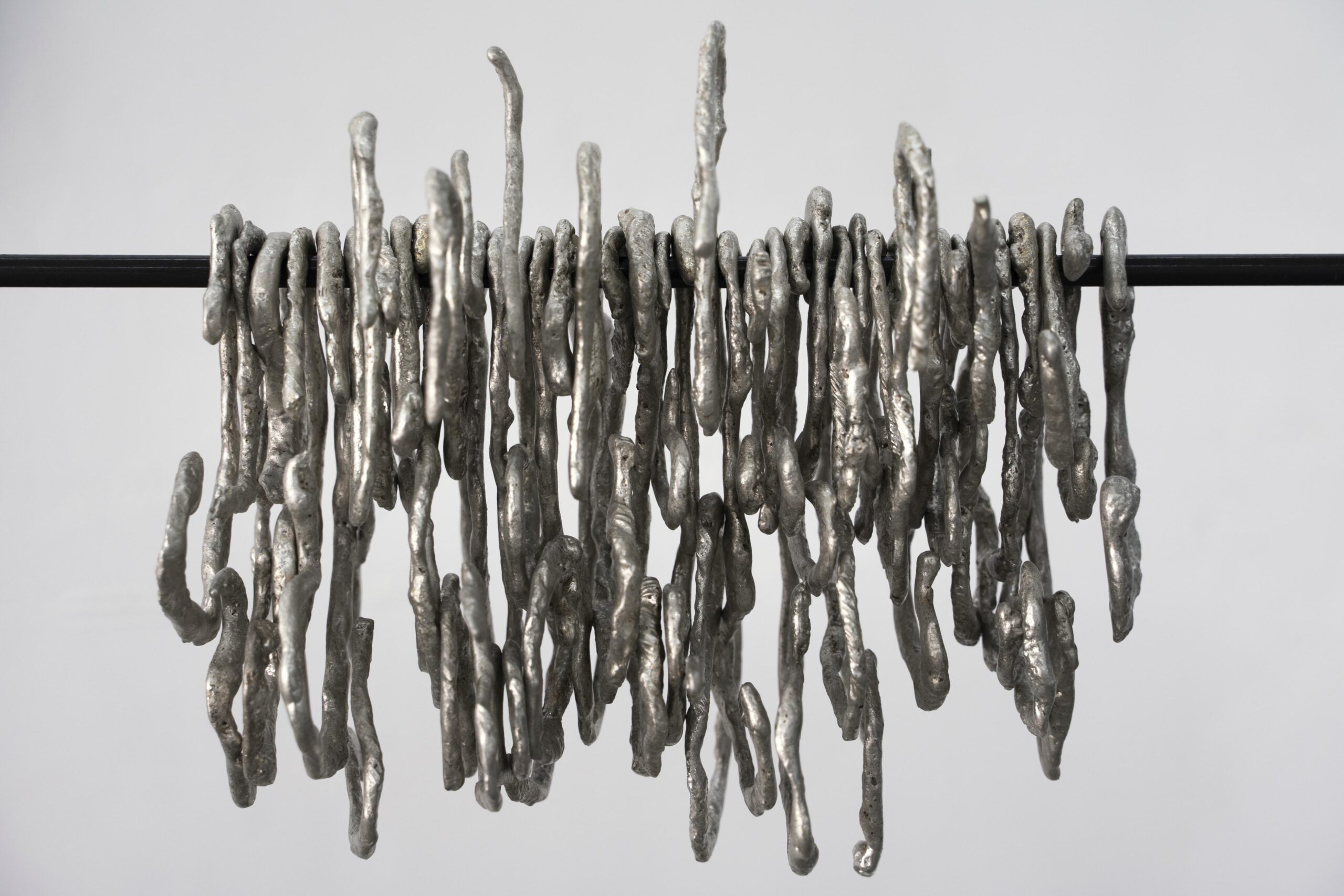
Primer susurro de la primavera and Última gárgara del invierno, by Álvaro Chior, capture a process of semantic saturation in which the artist multiplies the shapes of the letters G and S, modifying their appearance with each repetition as they simultaneously lose their meaning. In the silence that dominates the exhibition, the two sculptures seem to emit almost inaudible sounds, a kind of echo or whisper evoking the sonority of the transformed and repeated letters.
Plot
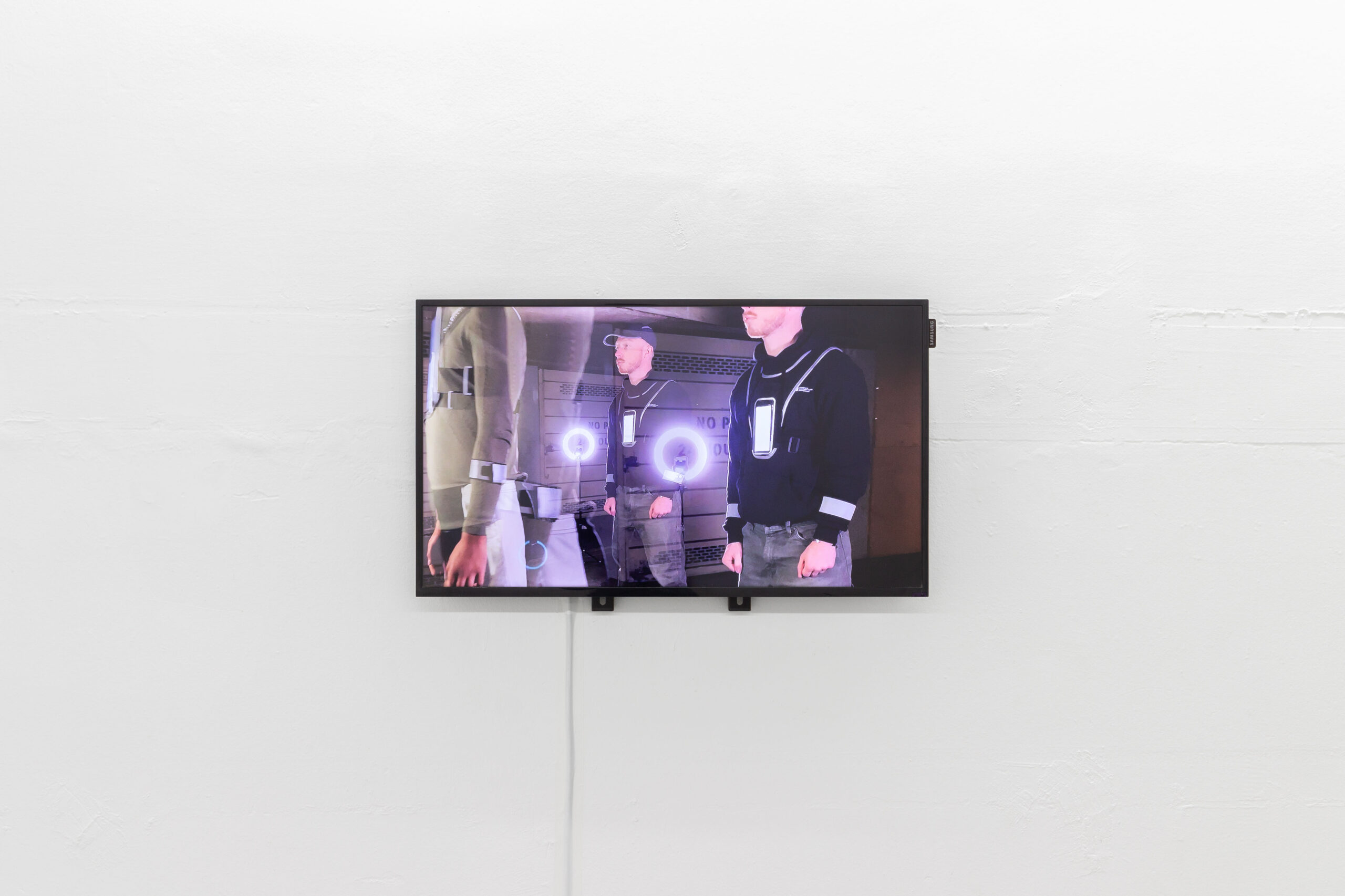
Finally, the video Stepping into Machine, by Nina Davies, depicts a fictional scenario in which governance systems are almost entirely controlled by computers. As a consequence, much of the population loses its jobs and is displaced to the ruins of Western civilization. To draw the attention of the computer systems that govern them, they record themselves moving as if they were digital images and upload the dance to TikTok. At the same time, the dancers who worked with Nina during filming also assimilated these movements through weeks of rehearsals, emulating the glitch or robotic gestures employed by the protagonists as they devised their defense against the machines.
The group exhibition Subplotters addresses the material and spatial qualities of that which cannot be seen or understood through our traditional categories of knowledge. In this way, a series of processes, gestures, and reminiscences of the hidden manifested—presences that engaged with the deconstruction of language, collective processes of resignifying the world, or the transmutation of materials and forms, among other concerns of our time. The exhibition included work by Álvaro Chior, Nina Davies, Evelina Hagglund, and Cristina Spinelli, the latter two having the opportunity to carry out a residency within the exhibition space.
Subplotters received support from the Europe Culture Moves program of Creative Europe and the Goethe-Institut.
Documentation: L. San Gregorio and Goro Studio
Curatorial text:
“Whispers, traces, plots—or subplots—reminiscences of inert matter.”
Subplotters begins from the difficulty of configuring alternative imaginaries of reality, observing those experiences, communities, and affects that remain hidden or invisible, revealing their strategies or processes.
If the contemporary world is an unbreakable fortress, governed by homogeneous and rigid discourses and narratives, the artistic practices presented in Subplotters seek cavities in the stone or holes in its moat where contemporaneity can be reconsidered. These are narratives found underground, buried beneath the foundations of the world, secrets that snake through the bodies of the present or future legends yet to be written.
Charge
After visiting several scrapyards and junkyards around Madrid and arranging in Pradiauto the scraps and objects that Evelina Hägglund and Cristina Spinelli would use during their residency, everything we touched gave us a jolt. This sensation lasted for several days—a kind of electric charge circulating through the space. A presence, invisible and tangible at the same time.
Unearth
Almost two years ago, Cristina created fulli for the exhibition The Tongue Says Loneliness, a mural made with fire on the wall, whose forms revisited those formalized in a previous work. In this way, a kind of ghost emerged from the wall, a spectral presence that she has unearthed in Subplotters.
Transmute
Beside her, M2 manifests a process of revelation and transmutation, as the artist captured the decorative motifs of a palace in Madrid in a mold, transforming stone into plaster and incorporating wax, shells, and caramel on its surface. In this way, four materials must pass from a liquid to a solid state to take their final form.
Resurrect
Two industrial fossils and round, corrugated rods. Rods cut, bent, joined with wire, and welded at their centers of gravity: Birth (in the shadow of civilization) and I can’t wait, by Evelina Hägglund—two forms of organic appearance yet made from the most artificial of materials. Two creatures, objects, or sculptures populate the exhibition space as new beings born from the hands of the artist.
Whisper
Primer susurro de la primavera and Última gárgara del invierno, by Álvaro Chior, capture a process of semantic saturation in which the artist multiplies the shapes of the letters G and S, modifying their appearance with each repetition as they simultaneously lose their meaning. In the silence that dominates the exhibition, the two sculptures seem to emit almost inaudible sounds, a kind of echo or whisper evoking the sonority of the transformed and repeated letters.
Plot
Finally, the video Stepping into Machine, by Nina Davies, depicts a fictional scenario in which governance systems are almost entirely controlled by computers. As a consequence, much of the population loses its jobs and is displaced to the ruins of Western civilization. To draw the attention of the computer systems that govern them, they record themselves moving as if they were digital images and upload the dance to TikTok. At the same time, the dancers who worked with Nina during filming also assimilated these movements through weeks of rehearsals, emulating the glitch or robotic gestures employed by the protagonists as they devised their defense against the machines.